Brainwave audio and the evidence: binaural beats, entrainment and focus
“Brainwave audio” is an umbrella term for sound meant to influence your mental state: binaural beats, isochronic tones and monaural beats. This guide explains what each one is, the theory of brainwave entrainment behind them, what the research on focus and mood actually shows, and how to try it sensibly.
Affiliate disclosure: This is a resource site. Some links to NeuroEnergizer are affiliate links, and we may earn a commission if you buy through them at no extra cost to you. See our full affiliate disclosure. This page is informational and is not medical advice.
Brainwaves in 60 seconds
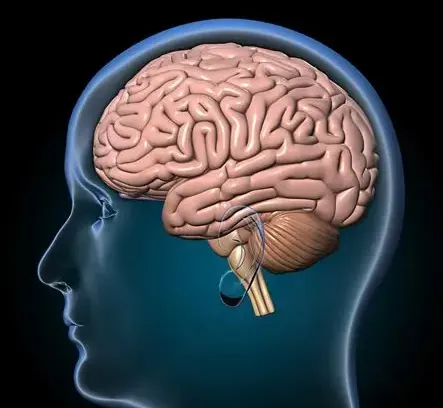
Your brain produces electrical activity in rhythmic patterns. Researchers group these by frequency: delta (~0.5–4 Hz, deep sleep), theta (~4–8 Hz, drowsiness, deep relaxation), alpha (~8–12 Hz, relaxed wakefulness), beta (~13–30 Hz, active thinking) and gamma (>30 Hz). These bands are descriptive labels, not switches you can flip on demand.
The three main types of brainwave audio
Binaural beats
Two slightly different tones, one per ear. The brain perceives a third “beat” at the difference frequency. Requires headphones.
Isochronic tones
A single tone switched rapidly on and off at a set rate. Works on speakers; some find it more noticeable but also more grating.
Monaural beats
Two tones combined before they reach your ears, producing an audible beat without headphones.
Products often layer these under music or nature sounds. NeuroEnergizer’s core track is a headphone-oriented binaural-beats session; see what NeuroEnergizer is and how it works.
Brainwave entrainment: the theory, and where it holds up
Entrainment (the “frequency-following response”) proposes that if you feed the brain a steady rhythm, populations of neurons tend to fire in time with it, and the associated mental state is meant to follow. The evidence is uneven:
- Stronger: rhythmic light reliably drives matching activity in the visual cortex, a long-established lab finding, and the auditory system does track amplitude-modulated sound (relevant to isochronic tones).
- Weaker: because a binaural “beat” is constructed inside the brain rather than present in the air, whether it produces broad cortical entrainment is disputed. The 2023 systematic review found conflicting EEG results.
- State change without brainwave change: people sometimes feel calmer with no measurable EEG shift, which points to relaxation, expectation and slow breathing doing some of the work.
What the focus and mood evidence actually shows
- Attention and memory: a 2022 meta-analysis found a small-to-moderate average effect (g ≈ 0.4), with wide disagreement between studies. A 2017 study using a global–local attention task found gamma-band binaural beats improved attentional focusing.
- Anxiety: a 2019 meta-analysis reported modest reductions in self-reported anxiety.
- Against: the 2023 EEG review found the entrainment question unresolved, and a large 2023 study reported that listening at home during a test slightly worsened scores.
- Practical: effects, where found, are small and depend on the person, the task, the frequency and how long you listen.
If a page tells you binaural beats are “clinically proven to boost IQ” or “increase focus by 300%,” it is inventing numbers. The real literature is cautious.
Reasonable expectation: brainwave audio is a low-risk tool that may help you feel calmer or more settled. It is not a proven cognitive enhancer, and effects vary a lot between people.
Why the routine may matter as much as the beats
To listen properly you stop, put on headphones, sit still and breathe. That deliberate transition reduces “attention residue” from the previous task. Many people who benefit from focus audio are partly benefiting from finally taking a clean break before starting, which is a feature you can lean into rather than a knock against the audio.
How to try it, and test it, for yourself
- Pick one track you find pleasant. Free platforms have plenty; NeuroEnergizer is a paid, pre-packaged option built around one short session.
- Use it right before the same task each day, at low volume, with headphones. Try 10–20 minutes if you can.
- Note your focus 1–5 afterwards, one line, no analysis.
- Review after two to three weeks. Keep it only if the trend, or simply how easily you start, clearly improved. Pair it with the basics in how to improve focus.
Brainwave audio FAQ
Do binaural beats really work?
The research is mixed. Meta-analyses suggest a small average benefit for attention, memory and anxiety, but many individual studies find no effect, and at least one large study found a small negative effect during a test. Expect a subtle nudge at most, and be aware that part of it may be the quiet listening routine rather than the tones.
What frequency is best for focus?
There is no firmly established 'focus frequency'. Beta-range beats (roughly 14–30 Hz) are marketed for alertness and theta/alpha for calm, but evidence for precise targeting is weak. Comfort and consistency matter more.
Is brainwave entrainment scientifically proven?
Not settled. Rhythmic light reliably drives matching activity in the visual cortex, and the auditory system tracks amplitude-modulated sound. Whether binaural beats produce broad cortical entrainment is disputed: a 2023 systematic review found about as many studies against as for.
Do I need special headphones?
Any stereo headphones or earbuds work for binaural beats. The requirement is separate left/right channels, not high-end gear. Isochronic and monaural audio do not need headphones at all.
Is it safe?
Rhythmic audio is low-risk for most people, but anyone with epilepsy or a seizure disorder should consult a doctor before using entrainment audio, and especially before using flickering-light devices. Keep the volume moderate to protect your hearing.
Want the price, contents and guarantee in one place?
See the current price, what comes in the package and how the 60-day money-back guarantee works. Prices and promotions change, so confirm them on the official page.
Where NeuroEnergizer fits
NeuroEnergizer applies these ideas in a single short daily binaural-beats track with a fixed routine. If you want to see how the product itself maps onto the evidence above, the how-it-works page goes through it step by step.
Sources & further reading
Selected peer-reviewed studies and authoritative resources on binaural beats, brainwave audio, attention, sleep and related topics. These describe the research field in general; they are not studies of NeuroEnergizer, which has not been tested in a published trial.
- Garcia-Argibay M, Santed MA, Reales JM. “Efficacy of binaural auditory beats in cognition, anxiety, and pain perception: a meta-analysis.” Psychological Research 83(2):357–372, 2019. Source
- Ingendoh RM, Posny ES, Heine A. “Binaural beats to entrain the brain? A systematic review of the effects of binaural beat stimulation on brain oscillatory activity.” PLoS ONE 18(5):e0286023, 2023. Source
- Chaieb L, Wilpert EC, Reber TP, Fell J. “Auditory beat stimulation and its effects on cognition and mood states.” Frontiers in Psychiatry 6:70, 2015. Source
- Colzato LS, Barone H, Sellaro R, Hommel B. “More attentional focusing through binaural beats: evidence from the global–local task.” Psychological Research 81(1):271–277, 2017. Source
- Orozco Perez HD, Dumas G, Lehmann A. “Binaural beats through the auditory pathway: from brainstem to connectivity patterns.” eNeuro 7(2), 2020. Source
- Jirakittayakorn N, Wongsawat Y. “Brain responses to a 6-Hz binaural beat: effects on general theta rhythm and frontal midline theta activity.” Frontiers in Neuroscience 11:365, 2017. Source
- Solcà M, Mottaz A, Guggisberg AG. “Binaural beats increase interhemispheric alpha-band coherence between auditory cortices.” Hearing Research 332:233–237, 2016. Source
- Gao X, Cao H, Ming D, et al. “Analysis of EEG activity in response to binaural beats with different frequencies.” International Journal of Psychophysiology 94(3):399–406, 2014. Source
- Wahbeh H, Calabrese C, Zwickey H. “Binaural beat technology in humans: a pilot study to assess psychologic and physiologic effects.” Journal of Alternative and Complementary Medicine 13(1):25–32, 2007. Source
- Reedijk SA, Bolders A, Hommel B. “The impact of binaural beats on creativity.” Frontiers in Human Neuroscience 7:786, 2013. Source
- Vernon D, Peryer G, Louch J, Shaw M. “Tracking EEG changes in response to alpha and beta binaural beats.” International Journal of Psychophysiology 93(1):134–139, 2014. Source
- Picton TW, John MS, Dimitrijevic A, Purcell D. “Human auditory steady-state responses.” International Journal of Audiology 42(4):177–219, 2003. Source
- National Institute of Neurological Disorders and Stroke. “Brain Basics: Understanding Sleep” (brainwave frequency bands and states). Source
- National Center for Complementary and Integrative Health. “Relaxation Techniques: What You Need To Know.” Source
- World Health Organization. “Deafness and hearing loss” fact sheet (safe-listening levels). Source