What is NeuroEnergizer?
NeuroEnergizer is a downloadable audio program centred on a short binaural-beats track, sold as a tool to help you settle into focus or relaxation. Here is a plain description of what it contains, how it is marketed, and what to keep a healthy distance from.
Affiliate disclosure: This is a resource site. Some links to NeuroEnergizer are affiliate links, and we may earn a commission if you buy through them at no extra cost to you. See our full affiliate disclosure. This page is informational and is not medical advice.
The product, described plainly
When you buy NeuroEnergizer you receive digital files: a primary audio track lasting roughly six to seven minutes, possibly one or two shorter “reset” tracks, and three PDF guides. There is no physical product, no capsule, no wearable and no ongoing service. You listen with headphones, ideally in a quiet place, once or twice a day.
The audio uses binaural beats. Your left ear hears one steady tone and your right ear hears another a few hertz higher or lower. The brain registers the difference as a slow pulsing “beat.” Producers choose the difference to sit in a named band, delta, theta, alpha or beta, each loosely associated with a mental state. NeuroEnergizer leans on the theta range (about 4–8 Hz), linked with deep relaxation and the drowsy edge of sleep.
How the product describes itself
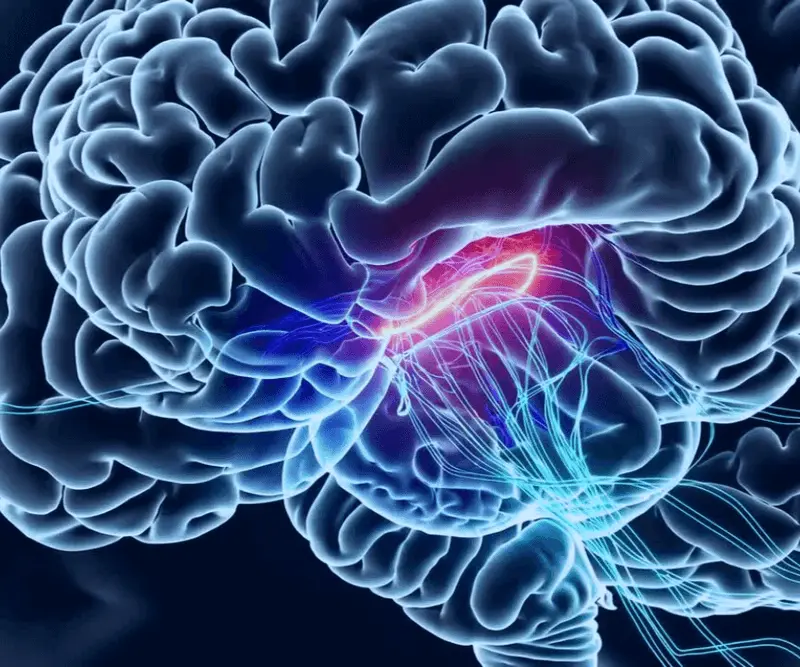
NeuroEnergizer’s own materials describe it as a “brain-training” or “brainwave” audio program inspired by studies of Albert Einstein’s brain, particularly reports that Einstein had an unusually well-connected corpus callosum, the band of fibres linking the two hemispheres. The pitch is that specific frequencies can stimulate that same “genius bridge,” and it is packaged around a “7-second brain trick” and a promise of near-instant mental shifts.
Our position: the Einstein anatomy research is real, but the leap from “Einstein had strong hemispheric connections” to “this track will build yours” is not supported by evidence. Enjoy the audio on its own merits and ignore the origin story.
What’s in the package
- NeuroEnergizer core audio track, the main short session.
- The Brain Fuel Guide, nutrition and habit tips for mental energy.
- Habits of High Achievers, routines and productivity strategies.
- The Brain Optimizer, a workbook of memory and clarity exercises.
- Occasionally, extra “quick-start” resources or bonus audio.
What NeuroEnergizer is not
- Not a medical device and not FDA-approved or FDA-evaluated.
- Not a proven treatment for ADHD, anxiety, depression, insomnia, tinnitus or cognitive decline.
- Not shown in published clinical trials to raise IQ, memory or intelligence.
- Not a supplement, nothing is ingested.
How it compares to free alternatives
You can find binaural-beats and focus audio for free on YouTube and streaming services, and subscription apps such as Brain.fm and Endel occupy the same space with larger libraries. NeuroEnergizer’s pitch is simplicity and a one-time price rather than a unique technology. If you already have a focus-audio habit you like, you may not need it; if you want a single short track and a defined routine, it is inexpensive to try. See audio for concentration for the wider landscape.
Common questions
Is NeuroEnergizer an app?
No. It is a set of downloadable audio files and PDFs. You play the audio with any normal media player or your phone.
Is it a subscription?
It is advertised as a one-time purchase with lifetime access to the files. Confirm the current terms at checkout.
Who is Dr. Orson MacQuoid?
That is the name the marketing attributes the program to. We have not been able to independently verify the person or their credentials, so we treat the biography as part of the product's story rather than confirmed fact.
NeuroEnergizer
See exactly what the current package includes
The official page lists the present contents, runtime and price. Opens in a new tab.
Pricing, bonuses and the money-back window are set by the official store and can change, always confirm on the official page.
Sources & further reading
Selected peer-reviewed studies and authoritative resources on binaural beats, brainwave audio, attention, sleep and related topics. These describe the research field in general; they are not studies of NeuroEnergizer, which has not been tested in a published trial.
- Garcia-Argibay M, Santed MA, Reales JM. “Efficacy of binaural auditory beats in cognition, anxiety, and pain perception: a meta-analysis.” Psychological Research 83(2):357–372, 2019. Source
- Ingendoh RM, Posny ES, Heine A. “Binaural beats to entrain the brain? A systematic review of the effects of binaural beat stimulation on brain oscillatory activity.” PLoS ONE 18(5):e0286023, 2023. Source
- Chaieb L, Wilpert EC, Reber TP, Fell J. “Auditory beat stimulation and its effects on cognition and mood states.” Frontiers in Psychiatry 6:70, 2015. Source
- Orozco Perez HD, Dumas G, Lehmann A. “Binaural beats through the auditory pathway: from brainstem to connectivity patterns.” eNeuro 7(2), 2020. Source
- Jirakittayakorn N, Wongsawat Y. “Brain responses to a 6-Hz binaural beat: effects on general theta rhythm and frontal midline theta activity.” Frontiers in Neuroscience 11:365, 2017. Source
- Solcà M, Mottaz A, Guggisberg AG. “Binaural beats increase interhemispheric alpha-band coherence between auditory cortices.” Hearing Research 332:233–237, 2016. Source
- Wahbeh H, Calabrese C, Zwickey H. “Binaural beat technology in humans: a pilot study to assess psychologic and physiologic effects.” Journal of Alternative and Complementary Medicine 13(1):25–32, 2007. Source
- Reedijk SA, Bolders A, Hommel B. “The impact of binaural beats on creativity.” Frontiers in Human Neuroscience 7:786, 2013. Source
- National Institute of Neurological Disorders and Stroke. “Brain Basics: Understanding Sleep” (brainwave frequency bands and states). Source
- Draganski B, Gaser C, Busch V, et al. “Neuroplasticity: changes in grey matter induced by training.” Nature 427:311–312, 2004. Source
- U.S. Food and Drug Administration. “General Wellness: Policy for Low Risk Devices” (guidance). Source
- Witkowski S, Trujillo LT, et al. / Chaieb L, Fell J. “Advancing our understanding of auditory beat stimulation” (review of methods and open questions). Source